

Every repossession has a cost, and right now costs are climbing on multiple fronts: insurance premiums, personal property handling, fuel, compliance.
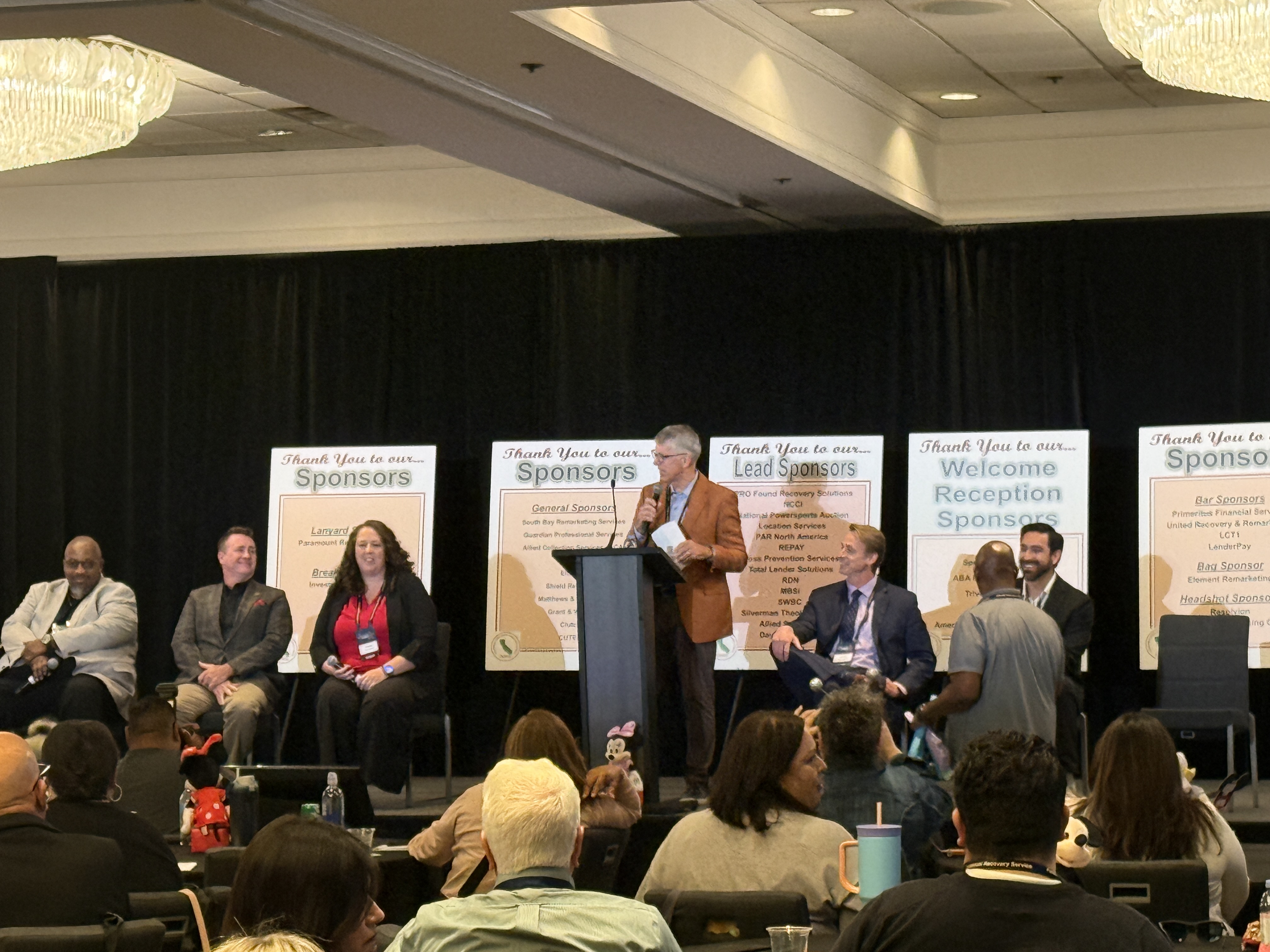
At CCUCC this month, I hosted a panel with people who feel that pressure from every side of the business: Da’Mon Stigler and Jon Muller of Desert Financial Credit Union on the lender side, Wayne Ray of American Recovery Association for agencies, and Kristina Haas of PAR and Steven Garcia of Loss Prevention Services for forwarders.
Here are five key takeaways.
Agency insurance has been getting harder to source for about 15 years. Carriers have left the market, and only a few still write this type of coverage, so agencies can’t shop around. This year, agencies have seen premiums double or triple even with no claims, causing agencies to cease operations.
Agencies have been responding in ways that heavily impact lenders:
Wayne summed up the issue best, “When a carrier will not cover a market, you no longer have an agent who can pick it up.”
Ten years ago, handling personal property meant a trash bag and a shelf. Now it requires trained staff, detailed inventories, required letters, and scheduled release appointments. Claims have grown too. One that used to settle for $800–$1,000 can now come in at $5,000–$8,000. Meanwhile, pay for the work has dropped close to nothing.
California raises the stakes. Agents must hold personal property for up to 60 days. If they can’t get into the vehicle, the vehicle itself stays on the lot for those 60 days, and the agent is liable for it the whole time. The state’s regulator, the Bureau of Security and Investigative Services, won’t accept a hold harmless in place of cleaning out the vehicle. If there’s no access after 96 hours, the lender has to provide a key. When your agent or forwarder pushes back on this, they’re following their regulator.
The panel agreed: pre-authorize key cuts. Nearly every key request gets approved anyway, so the approval step mostly adds delay, and each back-and-forth can add up to 10 days of storage. A pre-authorized limit and a goal of cutting the key by day three keep cars moving.
Redemption holds work the same way. Few borrowers who promise to redeem actually do, and holding the car longer adds fees the member ends up paying. The better approach is to send the notice, wait the required time, and move the car to auction, where the member can still redeem before the sale.
Compliance is the one place lenders can’t cut corners, because a violation costs far more than whatever was saved. As Jon put it, “Regulators can shut you down.”
Today’s compliance checks stop at the company level: insurance, facilities, owner background checks, and owner training. They don’t cover the people knocking on doors, talking to consumers, and cleaning out cars, which is where most of the risk sits. An estimated 30–40% of the roughly 1,600–1,800 agencies are tow companies or new entrants. They aren’t non-compliant, just new to the work. The industry is now building credentialing and education programs for field staff, and forwarders play a key role by setting minimum standards, monitoring licenses and insurance, and working with vendors that fall short.
Rising costs aren’t showing up in recovery pricing, especially in high-cost states like California, where insurance, labor, and vehicle values all run higher. That raises a fair question: should recovery fees vary by state? Fuel surcharges help, but they’re a temporary fix for a problem that needs a permanent answer.
Lenders are already seeing the effects. Mileage fees that used to be about $45 are now $85–$90 just to run an address, with no guarantee of a recovery. Some agencies are parking their camera cars because they can’t afford the gas, which means fewer LPR recoveries. Remote accounts that used to get run twice a week may now get run once.
Wayne shared the number that stayed with me. The average agency recovers about 23–27% of the accounts it works, and in most cases it only gets paid when it recovers the vehicle. So roughly three out of four runs are unpaid fuel, labor, and wear on equipment.
Lenders, forwarders, and agencies all agreed on the problem. Everyone is under cost pressure, and when one party pushes its cost onto another, the work slows down for everyone. Pre-authorized key cuts, discipline on holds, compliance that reaches field staff, and honest talks about pricing aren’t favors to agencies. They keep recovery working.
At MBSi, our platform sits between all three groups, and these are the conversations we want to have more of. Thank you to Da’Mon, Jon, Wayne, Kristina, Steven, and everyone at CCUCC for the opportunity to have a candid conversation to help move our industry forward.


Copyright © 2026, MBSi Corp. All rights reserved.
MBSi is proud to be a member of the Agero family of companies and pleased to connect our lender partners to the many services and products available through Agero.


Copyright © 2025, MBSi Corp. All rights reserved.
MBSi is proud to be a member of the Agero family of companies and pleased to connect our lender partners to the many services and products available through Agero.