

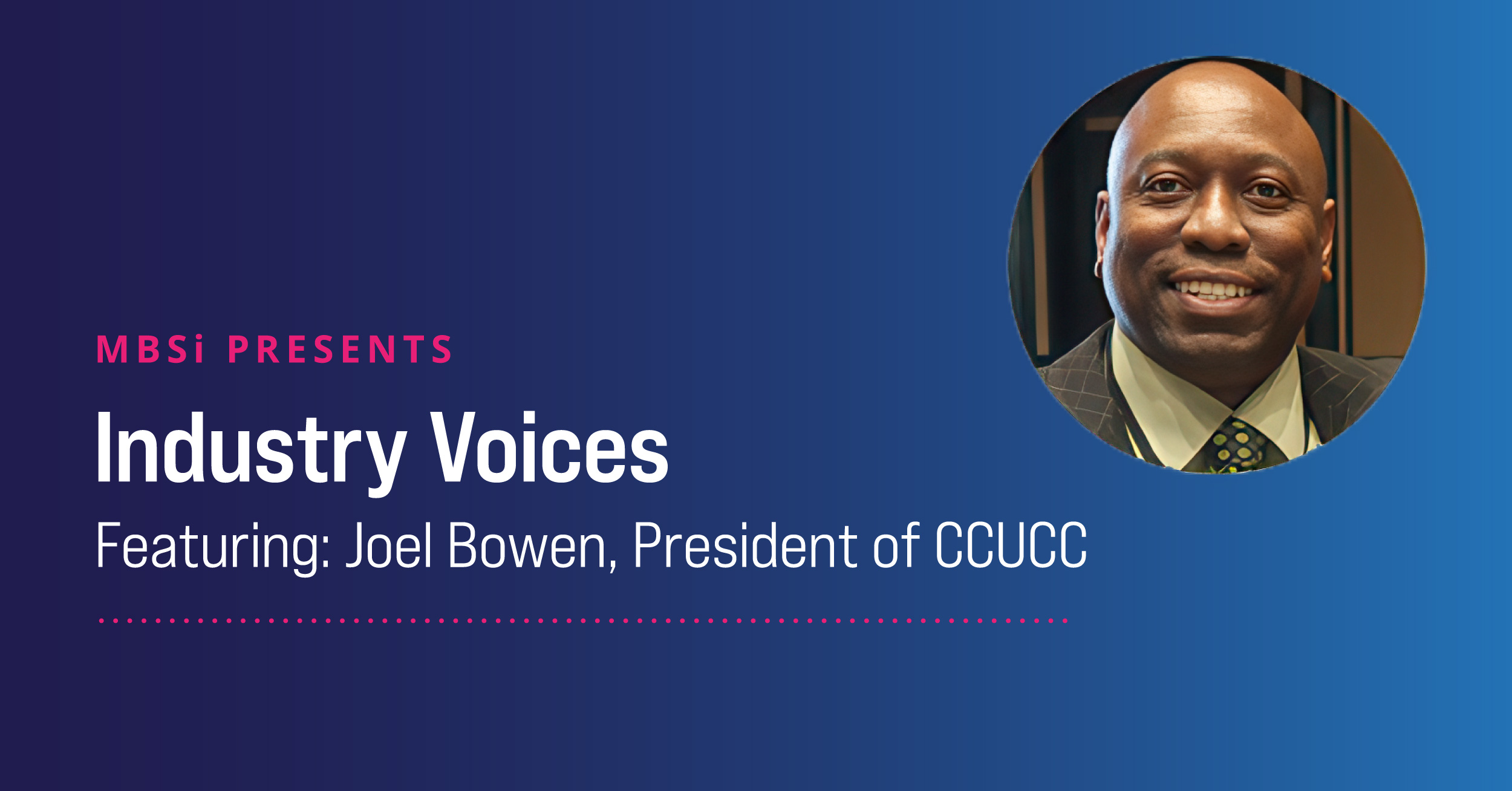
In this episode of Industry Voices, MBSi President Ray Peloso sits down with Joel Bowen, President of the California Credit Union Collectors Council (CCUCC), to talk fraud, growth, and what's next for credit union collections. Joel previews this year's annual convention, including sessions with FBI financial fraud agents and CaliforniaDMV investigators on title and lien sale fraud, and shares how CCUCC has grown into a resource for credit unions across California and neighboring states. The conversation also digs into where Joel sees the industry headed: rising defaults, the growing role of AI in collections and recovery workflows, and how lenders are already tightening credit in response. Joel closes with advice for anyone starting out in credit union collections, and a look ahead to CCUCC's 40th annual convention next year.
Ray Peloso: Ray Peloso here, president of MBSI, doing a thought leadership podcast with Joel Bowen from the California Credit Union Collectors Council. Joel, why don't you give us a quick introduction and we'll jump right in.
Joel Bowen: My name isJoel Bowen. I'm the president of the California Credit Union CollectorsCouncil. I know it's a mouthful, so over the years we've abbreviated our name to CCUCC. My role as president is to direct the organization in providing educational training, seminars, workshops, and conventions for our member base, which covers the entire state of California. Over the last several years, we've had neighboring states, including Arizona, Utah, Idaho, and Washington, see the value in the training we provide, and credit unions from those states are now joining the organization, mainly for the annual convention. The local chapter meetings are typically for local credit unions. So I'm the president of the organization, and I also oversee collections here at Caltech Employees FederalCredit Union.
Ray: Great. Thank you for that. Before we jump into the content, a quick icebreaker. When you travel, window or aisle seat?
Joel: Window. Always window.
Ray: Uber or Lyft?
Joel: Lyft.
Ray: All right. And coffee, tea, or neither?
Joel: Coffee.
Ray: All right. You warmed up?
Joel: I have to have it in the morning. If not, my day is a downer. [laughter]
Ray: Perfect. Okay, great. So, let's talk a little bit about CCUCC. What are you working on right now? What are the priorities in 2026?
Joel: We're actually in the midst of preparing for our upcoming annual convention in October. As a matter of fact, I just came back from the property in Anaheim last weekend. Our committee met to tie up some loose ends for this year's conference. It's shaping up to be a banner year. Attendance is actually up, so we're really pleased with that to the point where we sold out of all our exhibit tables, and we were able to have the hotel add a few more booths. So we still have a few more booths before we're sold out again. Right now we're working on making this another banner conference, and I'm looking forward to it. My time this year has been spent planning with the committee for another successful annual convention.
Ray: Great. What are some of the spotlight topics and conversations you're going to focus on at this year's conference?
Joel: We have a number of big topics. One of the things we've seen in the industry nationwide, not just in California, is the fraud trend: the losses we're facing as lenders are in the billions, tens of billions, and continuing to rise. This year I was fortunate to book two FBI special agents from the Los Angeles FBI FinancialFraud Division to talk to us about fraud and give us, as lenders, techniques we can use to help combat and reduce those losses. We also have two California DMV fraud investigators who will speak on title fraud, lien sale fraud, and title washing.
So those are two big fraud issues affecting credit unions right now. In addition to that, we have our normal legal panel, and a repossession panel that I think will be of interest to a lot of credit unions, since most lenders are seeing an increase in defaults based on what's happening in the economy right now. That's going to be one of the main topics of discussion at the conference this year.
Ray: Great. Thinking about the fraud session, because it sounds super interesting, FBI agents and investigators — is it going to be more of an hour, hour-and-a-half talk, or will there be working groups where people can practice identifying fraud and working through it? What are you thinking about the format of those discussions?
Joel: It's going to be all presentation-based. We're giving the two investigators a little more time because this is obviously an important topic, so much so that we're seeing an increase in registration from credit unions sending their fraud and compliance teams just for this one session. So it's clear the industry knows this is something we need to address, and I think having these two investigators there will be a big plus for our membership at large. I was fortunate to connect with these two FBI agents, and I'm going to try to maintain a relationship with them, because I think this is going to be an ongoing problem for our industry, and we need a direct connection with the people who deal with this on a day-to-day basis.
Ray: Great. Thinking a little about the conference and the planning. Give us a sense of how much the conference has grown. You mentioned this might be the biggest year, or I might be reading into that, but talk to me a little about the growth you've seen in the conference over the last several years.
Joel: Last year was a really good year for us in Reno, and based on where we are now compared to where we were last year, we're ahead on registration — that's one of the reasons I'm predicting we'll have an even bigger year this year. I think part of why there's such a big increase in interest in the conference this year is the agenda. We have a very solid agenda this year.
Ray: Switching gears a little. Thinking about the full year, you mentioned in your opening remarks that your focus is on education and training. Talk a little about how CCUCC supports those objectives throughout the year.
Joel: The organization provides educational training for credit union employees on both the collections and lending sides, bringing in expert speakers on topics relevant to what we're currently facing. We have bimonthly training sessions for our members throughout the state. Every single month there's a local meeting, either in Northern or Southern California. And then at the end of the year, always in October, we have our annual convention, which is essentially the final training of the year on a bigger scale.
Ray: Who's the typical person who attends your sessions? Is it all levels of the organization, or is there a certain type of employee at the credit union?
Joel: I was actually asked this about a year ago, and when I went back and looked at our attendance record, we saw that middle managers make up maybe 55 to 60% of attendees —managers and VPs. We also have a number of CEOs who've been attending over the years; in fact, I think we have about five CEOs registered to attend this year.That's a big plus for me. Seeing chief executive officers who see the value in what we're doing, in what we're presenting, and in how we're using the organization to augment their training and help their employees get better at what they do. It makes me feel like we're doing the right thing.
Ray: So I don't know if you've had a chance to look around the corner and think about '27 or '28, but is there anything on the horizon for CCUCC?
Joel: We're planning for this year, obviously, but next year is going to be a banner year. We'll be celebrating our 40th annual convention, which is a big number. So we're already planning ahead for that. We have a great group of directors who are passionate about what we do. Ever since I got into this industry, I've had a passion for providing educational value to those who need it. You're never too old to learn.I always say that to people when I meet them. That's the goal of this organization: to continue giving our members the opportunity to grow.
Ray: So sign me up for a birthday cake! I'll make sure I bring one next year. That's actually an awesome milestone for a nonprofit educational organization. And you may have already answered this, but I'll ask anyway: tell me a little about what drives Joel to be such a long-term leader and influencer for the CCUCC.
Joel: I've always had a passion for providing educational value. That's something I was brought up with as a child. Being able to provide people with the training they need to become better for the companies they work for has been the driving force behind what we do and what I do. It's been almost 14 years, and it's a lot of work. Most people don't see what goes on behind the scenes, but I have a very loving wife who understands my passion. She knows there are weekends I come home and spend a lot of time planning and preparing, because that's part of my DNA. I just have a really strong passion for education.
Ray: Okay, let's talk a little more about the credit union industry. Any predictions, forecasts, or key priorities you see for the next year or two. Give me the crystal ball of Joel:what do you think is going to happen in the credit union industry over the next year or two?
Joel: Right now, I think one of the big things in the industry that we all have to learn to adapt to is AI. AI has become a big piece of operational efficiency. A lot of credit unions are embracing AI and the technology we can use to augment what we currently have and make our operations run even smoother. I think that's going to continue in the years to come; each organization's success will depend on how much they embrace this change, because it's here to stay. I know some are a little reluctant to jump into that field, but we're all using AI in some form, and it's only going to become more prominent — not just on the collections or lending side, but even on the recovery side, helping credit unions manage their workflow, especially those with large volumes of repossessions and remarketing. So I think AI is going to be the one thing we have to stay on top of and learn to adapt to, because things will keep changing over the next year or two.
Ray: Switching gears to the other side of that question. What do you think are some of the biggest challenges, obstacles, or headwinds hitting the industry right now, if any?
Joel: I think one of the big issues right now, and one we're going to have to deal with and contend with, is that the economy is sputtering and people are hurting, so a lot of lenders are seeing a steady increase in defaults. I can see, over the next six months to a year, a glut on the market of units to remarket. Unless you have a plan now as an organization — I always say, let's not wait until it happens; let's look to the future and plan, so that when it does happen, you already have a plan in place. So I think what we're going to see over the next six months to a year is a continued increase in defaults. Many credit unions are hurting on both sides of the ball, so I think that's something we're going to have to plan for now: how do we address it now, so that when we hit the peak, we can actually handle it instead of looking for solutions once we're already there?
Ray: It's really interesting you say that, because I don't think the tracking is great, but most conventional wisdom is that last year may have been the largest year ever for repossessions, and you seem to be suggesting it might get worse before it gets better, which is wild. So, back to your lending and collections comments earlier — to the extent you've seen it, or have a point of view — do you think the industry has already tightened up credit on the front end, or not? It's a little daunting to think there might be more repossessions ahead rather than fewer.
Joel: To answer your question: yes, some lenders have already begun tightening up their lending in preparation for what's to come. Rather than keep the same guidelines in place, a lot of lenders are now being more selective about the loans they approve. Loans that might have been marginal, and approved, back then are now more likely to get a response like, "Mr. Ray, I can approve this loan for you alone, but if you can get your mother or your brother to co-sign, we can probably make this work." So we're seeing a lot of lenders pull back now, in order to prevent future losses or at least keep them to a minimum.
Ray: Got it. Great. So, a s we head toward a wrap-up, what would your advice be to someone coming into credit union collections these days? What would you tell them?
Joel: As a young person coming into the industry, one of the things I learned was to stay informed, stay up to date, and always have the desire to learn. In our industry, there are always changes and new regulations. As a young person coming up in this industry, it's important to read and to build the knowledge you need. Sometimes it won't come from within where you work. That's one of the reasons I'm so glad we have this organization: because we can supplement what the credit unions aren't doing. We can provide additional training at a very low cost, which is something I feel very passionate about providing educational value without making it too expensive for a lender to send a couple of their people to training. So, stay up to date with training and regulations, and remember that in the credit union world, we exist because of our members. I always tell my employees to think about why we're here: we're here to provide our members with service, even when it's on the back end.
Ray: Well, that was an awesome summary. So we'll leave it at that. It's always a pleasure chattingwith you, Joel. Thanks for taking the time out. I know your time is valuable,and you're working hard to get ready for your fall conference. So thank youvery much for taking a few minutes out of your busy day, and I appreciatehearing all your thoughts. Have a good one.
Joel: My pleasure.Looking forward to seeing you soon.
Ray: Cool. Take care.


Copyright © 2026, MBSi Corp. All rights reserved.
MBSi is proud to be a member of the Agero family of companies and pleased to connect our lender partners to the many services and products available through Agero.


Copyright © 2025, MBSi Corp. All rights reserved.
MBSi is proud to be a member of the Agero family of companies and pleased to connect our lender partners to the many services and products available through Agero.